Luis Eduardo Martínez López1, Andrés Felipe Olaya Rodríguez2, Luis Enrique Torres Londoño2, Yesika Juliana Rubio Acuña3, Alicia Acela Morales Jackson3, Paola Arce Peña4
Fundación Universitaria Ciencias de la Salud, Hospital San José de Bogotá, Colombia
1Colorectal Surgeon, Coordinator, Colorectal Surgery Service
2Colorectal Fellow, Colorectal Surgery Service
3General Surgery Resident
4Associate Professor, General Surgery Service
Correspondence
Luis E. Martínez López lemartinez@fucsalud.edu.co
Received: September 11, 2025
Accepted: May 28, 2026
How to cite: Martinez Lopez LE, Olaya Rodriguez AF, Torres Londoño LE, Rubio Acuña YJ, Morales Jackson AA, Arce Peña P. Management of Chronic Anal Fissure with Chemical Sphincterotomy: Experience from Two High-Complexity Centers in Bogotá.. Rev. argent. coloproctología 2026;37(3). doi: 10.46768/hd4pbe79
ABSTRACT
Introduction: Chronic anal fissure (AF) is one of the most common benign anorectal disorders and is associated with a substantial impairment in quality of life. Internal anal sphincter hypertonia plays a central role in its pathophysiology and provides the rationale for chemical sphincterotomy using botulinum toxin (BT).
Objective: To describe the clinical outcomes of patients with chronic AF treated with chemical sphincterotomy using BT.
Design: Retrospective observational cohort study.
Methods: A total of 79 patients with chronic AF treated between January 2017 and December 2023 were included. Clinical recurrence within the first 6 months of follow-up, persistent anal pain and rectal bleeding at 30 days after treatment, de novo fecal incontinence, and the BT doses administered were evaluated.
Results: Clinical recurrence occurred in 26.3% of patients. At 30 days, persistent anal pain and rectal bleeding were observed in 43.8% and 23.8% of patients, respectively. De novo fecal incontinence occurred in 8.9% of cases and was transient and mild in all affected patients. The most commonly administered dose of BT was 100 units.
Conclusions: Chemical sphincterotomy with BT was associated with a low incidence of transient de novo fecal incontinence and recurrence rates comparable to those reported in the literature, supporting its safety profile as a therapeutic option for chronic AF. Prospective comparative studies with longer follow-up are needed to determine the optimal dose and evaluate long-term clinical outcomes.
Keywords: chronic anal fissure; botulinum toxin; chemical sphincterotomy; recurrence; fecal incontinence; anal pain
Chronic anal fissure (AF) is one of the most common conditions encountered in colorectal practice. Initial management is conservative and includes warm sitz baths, topical application of local anesthetics and vasodilators, and dietary modifications aimed at increasing fiber intake and optimizing bowel function. However, a substantial proportion of patients have an inadequate response, with persistent symptoms that can significantly impair quality of life.
Lateral internal sphincterotomy (LIS) remains the treatment of choice, with healing rates exceeding 90% and recurrence rates below 5%. Nevertheless, because the procedure involves partial division of the internal anal sphincter, it carries a risk of transient or permanent fecal incontinence, with reported rates ranging from 9% to 35%, depending on the population studied, the definition of the outcome, and the duration of follow-up.1,2 This limitation has led several groups to restrict the use of LIS to selected patients or to those in whom conservative treatment has failed, prompting the development and evaluation of minimally invasive therapeutic alternatives that may reduce morbidity without compromising healing rates. Among these, botulinum toxin (BT) injection has emerged as a particularly promising option.1
However, the optimal BT dose that maximizes healing rates, minimizes recurrence, and reduces the incidence of adverse effects, particularly transient fecal incontinence, which may represent a clinically significant concern, has not yet been clearly established.
BT, a neurotoxin produced by the bacterium Clostridium botulinum, inhibits the presynaptic release of acetylcholine at the neuromuscular junction, resulting in transient chemical denervation and the consequent relaxation of the internal anal sphincter. This reduction in sphincter tone improves local perfusion, facilitates tissue regeneration, and promotes fissure healing. Several studies have reported a low incidence of adverse effects following BT injection. The most common complication is transient fecal incontinence, which may present as flatus incontinence or, less commonly, fecal incontinence, with reported rates ranging from 3% to 15%.3,4 In most cases, these symptoms resolve within 3 to 10 weeks after treatment. Healing rates range from 70% to 80%, whereas recurrence rates range from 20% to 30%.5,6
Given the limited evidence from Latin America, which is derived primarily from small cohorts and expert-based recommendations, this study aimed to evaluate the efficacy and safety of chemical sphincterotomy with BT in the treatment of chronic AF.
Given the limited evidence available in Latin America, which is derived primarily from small cohorts and expert-based recommendations, this study aimed to evaluate the efficacy and safety of chemical sphincterotomy with BT for the treatment of chronic AF. The findings may contribute to the evidence base supporting its use in clinical practice and provide a basis for standardizing therapeutic strategies tailored to our population.
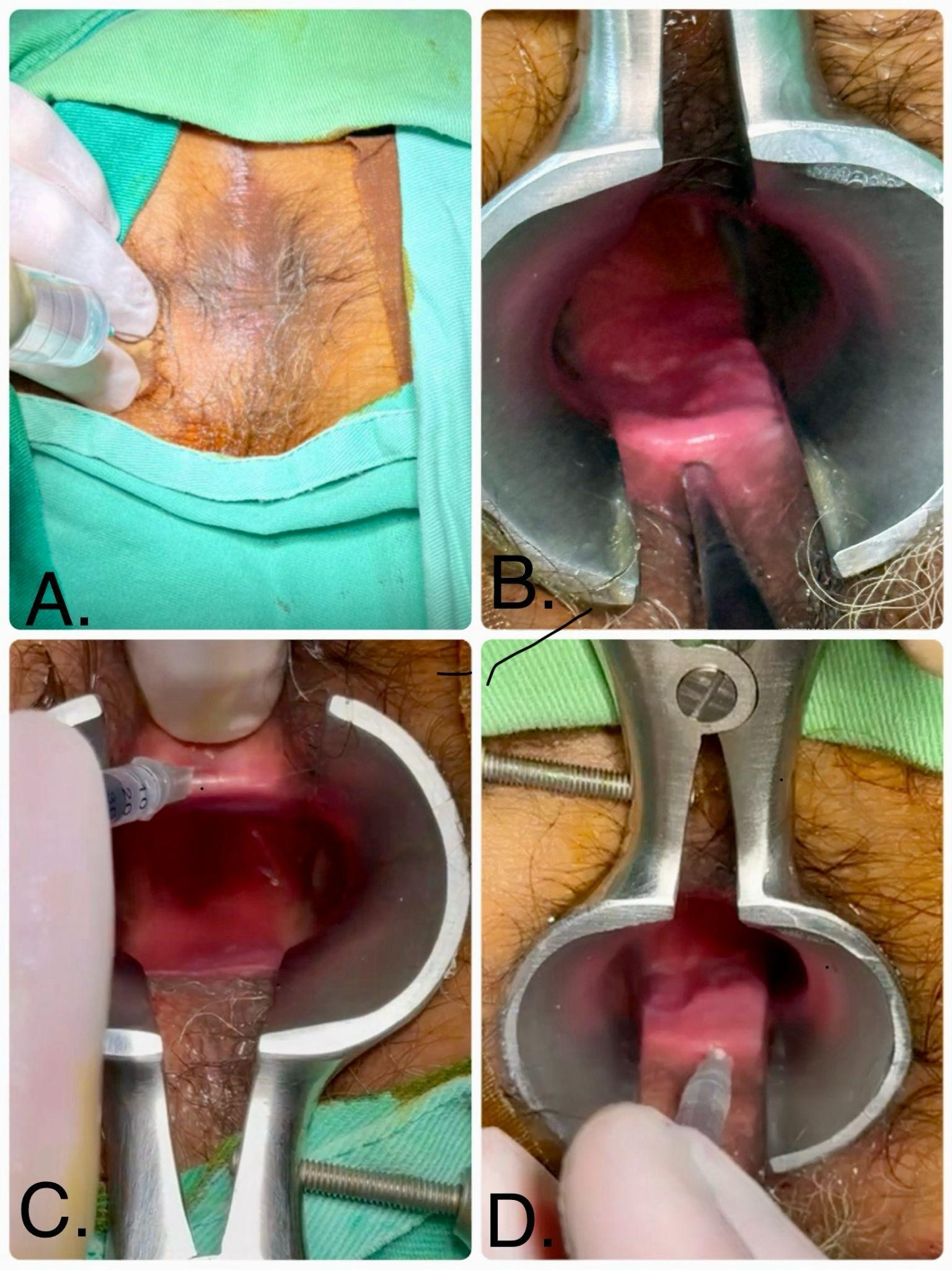
A retrospective observational cohort study was conducted between January 2017 and December 2023 at Hospital de San José and Clínica Los Nogales, two tertiary referral centers in Bogotá, Colombia. Patients with a diagnosis of chronic AF who were treated with chemical sphincterotomy using BT type A (BT-A; Botox®; Allergan, Irvine, CA, USA) were included.BT-A was administered with the patient in the prone jackknife position. Before administration, BT-A was reconstituted in 2 mL of 0.9% saline solution. After standard skin preparation and antisepsis, an anoscope was inserted to identify the fissure. The anal canal was then divided into four quadrants to determine the injection sites. BT-A was injected into the intersphincteric space under direct anoscopic visualization and digital guidance to target the internal anal sphincter. A 6-mm needle attached to an insulin syringe was used, with an injection depth of 6 mm. The total dose was distributed evenly among the predetermined injection sites
(Fig. 1).
Recurrence was defined as the reappearance of the AF, confirmed by physical examination at follow-up visits 3 and 6 months after chemical sphincterotomy. Persistent symptoms were defined as the presence of bleeding or anal pain 30 days after the procedure; these findings did not necessarily indicate the absence of anatomic healing.
Patients with incomplete follow-up or a history of fecal incontinence were excluded. Relevant comorbidities, including immunosuppression, obesity, and diabetes, as well as the administered BT-A dose and anatomic location of the anal AF, were recorded.
Recurrence was defined as the reappearance of the AF, confirmed by physical examination at follow-up visits 3 and 6 months after chemical sphincterotomy. Persistent symptoms were defined as the presence of bleeding or anal pain 30 days after the procedure; these findings did not necessarily indicate the absence of anatomic healing.
Patients with incomplete follow-up or a history of fecal incontinence were excluded. Relevant comorbidities, including immunosuppression, obesity, and diabetes, as well as the administered BT-A dose and anatomic location of the anal AF, were recorded.
Statistical analyses were performed using Stata®, version 18. Descriptive analyses included measures of central tendency and dispersion for continuous variables and confidence intervals, absolute frequencies, proportions, and cumulative percentages for categorical variables.
Of the 104 patients initially identified, 25 were excluded for not meeting the selection criteria, primarily because of a history of fecal incontinence and/or incomplete follow-up. The final analysis cohort comprised 79 patients. The mean age was 49.2 years (95% CI, 46.1–52.4), with a range of 19 to 77 years. Women accounted for 64.5% of the cohort. The most frequently documented comorbidity was obesity (40.5%), followed by diabetes mellitus (10.1%) and immunosuppression (10.1%).
Preoperative symptoms were highly prevalent. Pain was the predominant symptom, reported in 94.9% of patients, followed by bleeding, reported in 65.8%. These findings reflect the substantial symptom burden at the time of intervention. No patient had a history of fecal incontinence, allowing for accurate identification of de novo fecal incontinence.
Regarding anatomic location of the AF, posterior fissures were the most common (56.9%), followed by anterior fissures (32.9%), whereas lateral and combined-location fissures accounted for a smaller proportion of cases (Table 1).
The most commonly used BT-A dose was 100 U, administered in 82.5% of cases. The other doses administered were 50 U (8.8%), 200 U (6.3%), and 60 U (2.5%). Regarding clinical outcomes, persistent anal pain at 30 days was observed in 43.8% of patients, whereas bleeding persisted in 23.8%. De novo fecal incontinence occurred in 8.9% of cases; in all patients, it was transient and limited to mild episodes (Table 2). During the first 6 months of follow-up, clinical recurrence was documented in 26.3% of patients.
| Variable | N = 79 |
|---|---|
| Sex, n (%) Female Male | 51 (64.5) 28 (35.4) |
| Age, years; median (range) | 49.2 (19–77) |
| Comorbidities, n (%) Obesity Immunosuppression Diabetes mellitus | 32 (40.5) 8 (10.1) 8 (10.1) |
| Symptoms, n (%) Anal pain Bleeding | 75 (94.9) 52 (65.8) |
| Location, n (%) Anterior Posterior Lateral | 26 (32.9) 45 (56.9) 3 (3.8) |
Tabla 2. Treatment outcomes following botulinum toxin injection
| Variable | Pretreatment n (%) | Post-treatment n (%) |
|---|---|---|
| Anal pain | 75 (94.9) | 38 (48.1) |
| Bleeding | 52 (65.8) | 19 (24.0) |
| Fecal incontinence | 0 | 7 (8.8) |
The findings of this study provide further insight into the clinical characteristics of chronic AF in our population. The mean age was approximately 50 years, with a predominance of female patients, consistent with findings from international series reporting that chronic AF primarily affects young and middle-aged adults, with a higher prevalence among women.1,3 The high frequency of anal pain and bleeding before treatment underscores the substantial symptom burden associated with this condition and the need for effective and safe therapeutic strategies.
In our cohort, the use of a 100 IU dose of BT-A was predominant, reflecting a trend toward the use of higher doses with the aim of providing a more sustained relaxation of the internal anal sphincter and, potentially, reducing recurrence. However, the present study was not designed to assess the association between the administered dose and clinical outcomes, and was not adequately powered for such an analysis. Accordingly, our findings do not provide sufficient evidence to establish a dose–response relationship.7,8
Current evidence does not support a universally optimal dose of BT for the treatment of chronic AF. However, observational studies, clinical trials, and systematic reviews suggest that doses ranging from 50 to 100 U can achieve effective relaxation of the internal anal sphincter and are associated with healing rates of approximately 60% to 85%.5,7,9,10 The meta-analysis by Bobkiewicz et al.,8 which included 34 prospective studies and more than 1,500 patients, demonstrated substantial heterogeneity in the doses used (5–150 U), without identifying a clear linear association between higher doses and improved clinical outcomes. The systematic review by Vitoopinyoparb et al.7 found that both dose and injection site may influence the healing rates, although the overall of the current evidence remains limited.
In our cohort, a decrease in symptoms was observed after the intervention, suggesting a favorable clinical response. However, the persistence of anal pain and bleeding in a proportion of patients should be interpreted in light of the pathophysiology of chronic AF and the progressive effect of DT, whose maximal clinical effect is not immediate. Previous studies have shown that a significant proportion of patients continue to experience residual pain and occasional episodes of bleeding during the first several weeks after injection, particularly in patients with long-standing chronic fissures associated with substantial fibrosis or persistent sphincter hypertonia.2,9,10
The systematic review by Oad et al.10 reported overall clinical healing rates ranging from 60% to 85%; however, several included studies described gradual symptomatic improvement extending beyond the first month of follow-up, suggesting that incomplete early resolution does not necessarily represent definitive treatment failure. Comparisons across studies are challenging because of substantial methodological heterogeneity related to the dose, injection technique, injection site, and definition of healing, all factors that may influence reported rates of persistent symptoms and recurrence.8
In the present study, persistence of symptoms during the early postoperative period may also be related to the predominance of patients with long-standing chronic AF and to the limitations inherent to the retrospective study design. In particular, we were unable to standardize pain assessment using validated scales or the timing of clinical follow-up after the procedure, which may have affected the estimation of persistent symptoms.
The recurrence rate observed in our study (26.3%) is consistent with rates reported in the literature. Barbeiro et al.2 reported recurrence rates approaching 30% during long-term follow-up, whereas recent systematic reviews have reported recurrence rates ranging from 20% to 40%, particularly in studies with follow-up exceeding 1 year.5,7 Similarly, the systematic review by Oad et al.10 reported cumulative recurrence rates of approximately 30% to 40% between 1 and 3 years after BT treatment, highlighting recurrence as one of the principal limitations of chemical sphincterotomy compared with LIS.
A particularly relevant finding was the low rate of de novo fecal incontinence (8.9%), which was transient and limited to mild episodes. This finding supports the potential role of BT as an attractive treatment option for younger patients, multiparous women, and those at increased risk of sphincter dysfunction.3,11 This outcomes reinforces the favorable functional profile of chemical sphincterotomy compared with LIS, a procedure for which different series have reported fecal incontinence rates ranging from 5% to 35%, depending on the surgical technique used and the duration of follow-up.4,10,11
LIS continues the highest overall healing rates, as demonstrated by meta-analyses such as that by de Bonyad et al.5 Nevertheless, BT represents a less invasive therapeutic alternative with the potential advantage of preserving sphincter integrity and reducing the risk of permanent functional impairment, particularly fecal incontinence.
The main limitations of this study include its retrospective design, the absence of a comparator group treated with LIS, the limited follow-up period, which could have underestimated late recurrences described in other series, and the lack of objective functional assessment using anorectal manometry or validated incontinence scales. Nevertheless, the consistency of the findings across both centersthe sample size, and the quality of the clinical records strengthen the internal validity of the study and provide a solid basis for the development of future prospective and comparative investigations.
Individualized treatment selection remains an important component of the management of chronic AF and should take into account clinical factors such as age, sex, previous surgical history, obstetric history, and the individual risk of sphincter dysfunction.
Chemical sphincterotomy with BT for the management of chronic AF was associated with a low incidence of transient de novo fecal incontinence, and recurrence rates within the ranges previously described in the literature. Significant symptomatic improvement and a favorable safety profile were observed during the follow-up period.
These results should be interpreted in the context of the methodological limitations inherent to the retrospective study design and the absence of a comparative group. Prospective studies with long-term follow-up are needed to compare the different doses needed and contribute to standardization of its administration.
Conflict of interest statement: None.
Funding: None.
Data availability statement: The data are publicly available.
ORCIDs:
Luis E. Martínez López: https://orcid.org/0000-0001-8328-9599
Andrés F. Olaya Rodríguez: https://orcid.org/0009-0009-9940-1675
Luis E. Torres Londoño: https://orcid.org/0009-0005-4224-9474
Yesica Juliana Rubio Acuña: https://orcid.org/0000-0002-3123-0250
Alicia Morales Jackson: https://orcid.org/0009-0009-7556-7443
Paola Arce Peña: https://orcid.org/0009-0005-4208-1165
Arslan C, Yildirim Y, Kocak M, Bisgin T, Bayraktar IE, Bayraktar O. The 5-year outcomes and predictors of healing in chronic anal fissure treated with botulinum toxin: a retrospective analysis of 199 cases. Tech Coloproctol. 2025;29(1):122. doi:10.1007/s10151-025-03162-y.
Barbeiro S, Atalaia-Martins C, Marcos P, Gonçalves C, Canhoto M, Arroja B, et al. Long-term outcomes of botulinum toxin in the treatment of chronic anal fissure: 5 years of follow-up. United European Gastroenterol J. 2017;5(2):293–97. doi:10.1177/2050640616656708.
Borsuk DJ, Studniarek A, Park JJ, Marecik SJ, Mellgren A, Kochar K. Use of botulinum toxin injections for the treatment of chronic anal fissure: results from an American Society of Colon and Rectal Surgeons survey. Am Surg. 2023;89(3):346–54. doi:10.1177/00031348211023446.
Sabuncuoglu MZ, Sozen I, Zihni İ, Celik G, Turan B, Acar S, et al. Comparative analysis of open and closed sphincterotomy for the treatment of chronic anal fissure: safety and efficacy evaluation. Med Sci Monit. 2024;30:e944127. doi:10.12659/MSM.944127.
Bonyad A, Zadeh RH, Asgari S, Eghbal F, Hajhosseini P, Ghadri H, et al. Botulinum toxin injection versus lateral internal sphincterotomy for chronic anal fissure: a meta-analysis of randomized controlled trials. Langenbecks Arch Surg. 2024;409(1):355. doi:10.1007/s00423-024-03484-9.
Ascanelli S, Rossin E, Aisoni F, Sette E, Chimisso L, Valpiani G, et al. Botulinum toxin injection for chronic anal fissure: a prospective controlled study with long follow-up. Minerva Surg. 2024;79(3):293-302. doi:10.23736/S2724-5691.24.10228-6.
Vitoopinyoparb K, Insin P, Thadanipon K, Rattanasiri S, Attia J, McKay G, e al. Comparison of doses and injection sites of botulinum toxin for chronic anal fissure: a systematic review and network meta-analysis of randomized controlled trials. Int J Surg. 2022;104:106798. doi:10.1016/j.ijsu.2022.106798.
Bobkiewicz A, Francuzik W, Krokowicz L, Studniarek A, Ledwosiński W, Paszkowski J, et al. Botulinum toxin injection for treatment of chronic anal fissure: is there any dose-dependent efficiency? A meta-analysis. World J Surg. 2016;40(12):3064–72. doi:10.1007/s00268-016-3693-9.
Brisinda G, Chiarello MM, Crocco A, Bentivoglio AR, Cariati M, Vanella S. Botulinum toxin injection for the treatment of chronic anal fissure: uni- and multivariate analysis of the factors that promote healing. Int J Colorectal Dis. 2022;37(3):693–700. doi:10.1007/s00384-022-04110-0.
Oad S, Qadir MU, Alam F, Jawed I, Jabeen S, Javaid M, et al. Efficacy of botulinum toxin in the treatment of chronic anal fissure: a comprehensive systematic review. Ann Med Surg (Lond). 2025;87(8):5142–52. doi:10.1097/MS9.0000000000003471.
Lyle V, Young CJ. Anal fissures: an update on treatment options. Aust J Gen Pract. 2024;53(1-2):33–5. doi:10.31128/AJGP/05-23-6843